
Commissioning & Training

Ensuring a Safe and Reliable Start
The commissioning process begins as soon as the spreader arrives at the customer’s site. From that moment onward, our engineers focus on ensuring safe operation, reliable performance and full compliance with all specified requirements.
Before the spreader enters service, we inspect, test and validate every mechanical, electrical and functional system. In addition, we verify that all components operate correctly under real crane conditions. As a result, customers can be confident that their equipment is ready for daily terminal operations. Furthermore, this structured approach minimizes risks and helps achieve a smooth start-up process.
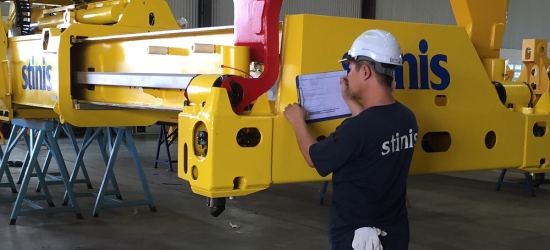
Mechanical & Electrical Inspection
- Visual inspection of the spreader structure and components
- Verification of all safety systems and emergency stop functions
- Inspection of mechanical connections and moving parts
- Connection and validation of electrical power and communication systems
- Verification of sensors, wiring, and I/O signals
Functional Testing
After completing the initial inspections, our engineers energize the spreader and test every operational function individually. This allows us to verify performance, reliability and system integrity before moving to the next phase.
Subsequently, the team conducts operational testing under realistic working conditions. Depending on customer requirements and project specifications, the endurance test typically runs between 8 and 24 hours. Consequently, operators receive equipment that has proven its performance before final acceptance and handover.
After successful completion of the individual function tests, the spreader undergoes operational testing under real-world conditions. Depending on customer requirements and project specifications, this endurance test typically runs for 8 to 24 hours before final acceptance and handover.



Training & Knowledge Transfer
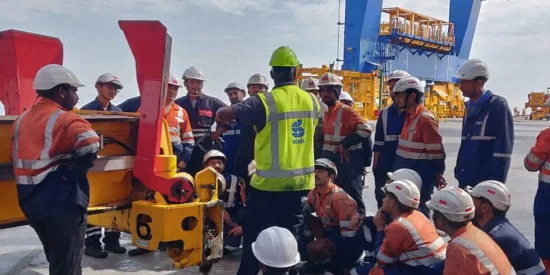
Commissioning is not only about equipment performance. Equally important is ensuring that operators and maintenance personnel have the knowledge required to use and maintain the spreader safely and efficiently. Therefore, Stinis provides practical training programs that combine technical knowledge with hands-on experience. Moreover, our specialists work closely with customer teams throughout the commissioning process. As a result, personnel gain the confidence and skills needed for long-term operation and maintenance.
Maintenance Team Training
During the training program, participants learn how the spreader operates and how to keep it performing at its best. In addition, our specialists explain inspection procedures, preventive maintenance activities and troubleshooting methods.
Consequently, maintenance teams can identify issues more quickly, reduce downtime and improve equipment reliability throughout the spreader’s service life.
Software Training
Customers responsible for advanced diagnostics receive additional software training. During these sessions, participants learn how to access the PLC, configure parameters and perform diagnostic procedures.
Furthermore, our engineers demonstrate practical fault-finding techniques. Therefore, maintenance teams can respond more effectively to operational issues and restore equipment faster when required.
Final Acceptance & Handover
Once all inspections, tests and training activities have been completed successfully, the final handover process begins.
Together, the customer representative and the Stinis Service & Commissioning Engineer review the results and confirm that all requirements have been met. Subsequently, both parties sign the Commissioning Test Procedure Report and the Final Acceptance Certificate.
Following acceptance, the spreader is fully operational and ready for deployment within the terminal environment. In addition, customers can rely on ongoing support from the Stinis service team whenever assistance is required.
Commissioning & Training
Ensuring a Safe and Reliable Start
The commissioning process begins as soon as the spreader arrives at the customer’s site. From that moment onward, our engineers focus on ensuring safe operation, reliable performance and full compliance with all specified requirements.
Before the spreader enters service, we inspect, test and validate every mechanical, electrical and functional system. In addition, we verify that all components operate correctly under real crane conditions. As a result, customers can be confident that their equipment is ready for daily terminal operations. Furthermore, this structured approach minimizes risks and helps achieve a smooth start-up process.
Mechanical & Electrical Inspection
- Visual inspection of the spreader structure and components
- Verification of all safety systems and emergency stop functions
- Inspection of mechanical connections and moving parts
- Connection and validation of electrical power and communication systems
- Verification of sensors, wiring, and I/O signals
Functional Testing
After completing the initial inspections, our engineers energize the spreader and test every operational function individually. This allows us to verify performance, reliability and system integrity before moving to the next phase.
Subsequently, the team conducts operational testing under realistic working conditions. Depending on customer requirements and project specifications, the endurance test typically runs between 8 and 24 hours. Consequently, operators receive equipment that has proven its performance before final acceptance and handover.
After successful completion of the individual function tests, the spreader undergoes operational testing under real-world conditions. Depending on customer requirements and project specifications, this endurance test typically runs for 8 to 24 hours before final acceptance and handover.
Training & Knowledge Transfer
Commissioning is not only about equipment performance. Equally important is ensuring that operators and maintenance personnel have the knowledge required to use and maintain the spreader safely and efficiently. Therefore, Stinis provides practical training programs that combine technical knowledge with hands-on experience. Moreover, our specialists work closely with customer teams throughout the commissioning process. As a result, personnel gain the confidence and skills needed for long-term operation and maintenance.
Maintenance Team Training
During the training program, participants learn how the spreader operates and how to keep it performing at its best. In addition, our specialists explain inspection procedures, preventive maintenance activities and troubleshooting methods.
Consequently, maintenance teams can identify issues more quickly, reduce downtime and improve equipment reliability throughout the spreader’s service life.
Software Training
Customers responsible for advanced diagnostics receive additional software training. During these sessions, participants learn how to access the PLC, configure parameters and perform diagnostic procedures.
Furthermore, our engineers demonstrate practical fault-finding techniques. Therefore, maintenance teams can respond more effectively to operational issues and restore equipment faster when required.
Final Acceptance & Handover
Once all inspections, tests and training activities have been completed successfully, the final handover process begins.
Together, the customer representative and the Stinis Service & Commissioning Engineer review the results and confirm that all requirements have been met. Subsequently, both parties sign the Commissioning Test Procedure Report and the Final Acceptance Certificate.
Following acceptance, the spreader is fully operational and ready for deployment within the terminal environment. In addition, customers can rely on ongoing support from the Stinis service team whenever assistance is required.